Aug . 13, 2024 14:59 Back to list
Understanding the Greater Stability of Graphite Compared to Diamond Structure and Properties
Why is Graphite More Stable Than Diamond?
Graphite and diamond are two well-known allotropes of carbon, each exhibiting distinct physical properties and structures. While both consist entirely of carbon atoms, their arrangement leads to significant differences in stability, with graphite being the more stable form under standard conditions. Understanding why graphite is more stable than diamond requires an exploration of their structures, bonding, and thermodynamic properties.
Structure and Bonding
Graphite has a planar layered structure, where each carbon atom is sp² hybridized, forming three sigma bonds with neighboring atoms in a two-dimensional plane. The fourth valence electron of each carbon atom is delocalized, creating a sea of electrons above and below the planes. This delocalization contributes to the electrical conductivity of graphite and allows for weak van der Waals forces to hold the layers together, enabling them to slide past one another easily.
In contrast, diamond has a three-dimensional tetrahedral structure in which each carbon atom is sp³ hybridized, forming four strong covalent bonds with neighboring carbon atoms. This creates a rigid and three-dimensional network that gives diamond its exceptional hardness and high melting point. However, while the structure of diamond is extremely strong, it becomes unstable when considering thermodynamic conditions.
Thermodynamic Stability
From a thermodynamic perspective, stability can be assessed through Gibbs free energy. At room temperature and pressure, graphite is lower in Gibbs free energy compared to diamond. This means that graphite is the more thermodynamically favored form; it requires energy input for diamond to transform into graphite. Calculations show that the energy difference between the two allotropes is significant, with diamond being about 1.7 eV per atom less stable than graphite.
why is graphite more stable than diamond
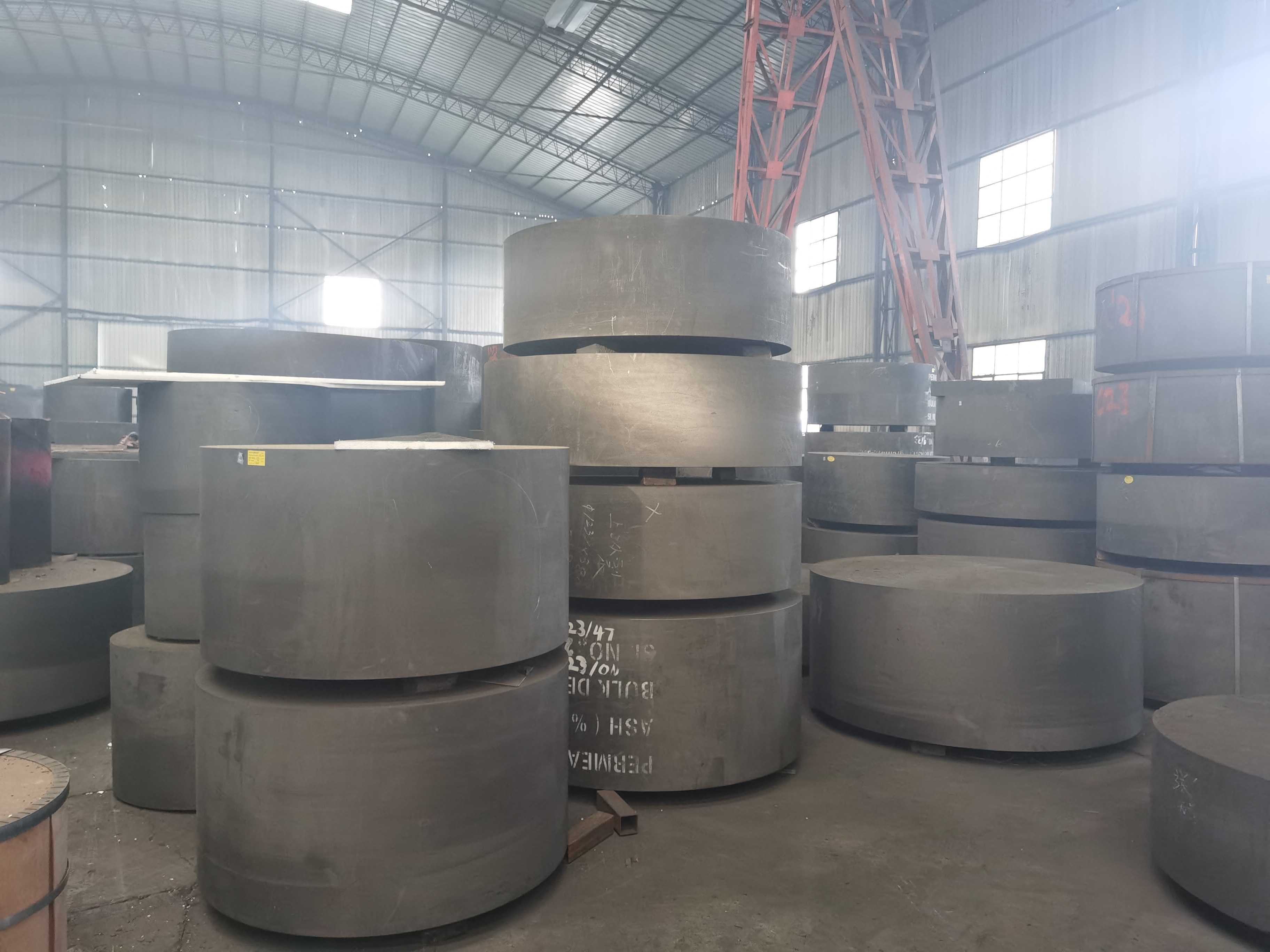
The stability of graphite relative to diamond can be attributed to several factors. Firstly, the layered structure of graphite allows for easier atomic rearrangements and lower energy configurations. During any phase transformation or reaction, the transition to a lower energy state is preferred, which graphite naturally facilitates.
Secondly, the electronic configuration plays a critical role. The delocalized electrons in graphite lead to a stabilization not present in diamond. Energy calculations indicate that the resonance and the delocalized pi-electrons in graphite lower its overall energy. This contrasts with diamond, which is confined to strong covalent bonds that result in high energy barriers for any transformations.
Real-World Implications
The less stable nature of diamond when compared to graphite has practical implications. For example, although diamonds are often regarded as the ultimate symbol of durability, they can convert back to graphite under certain conditions, such as high temperatures and pressures. This process, however, is extremely slow and usually takes place over geological timescales.
In materials science, the knowledge that graphite is more stable than diamond allows for the intentional use of graphite in various applications, including lubricants and electrodes in batteries. In contrast, diamonds are employed in cutting tools and jewelry, highlighting their hardness and aesthetic appeal but also reminding us of their relative instability.
Conclusion
In conclusion, graphite’s greater stability compared to diamond is rooted in its distinct structural and bonding characteristics as well as its favorable thermodynamic properties. The efficiency of energy minimization in graphite’s layered structure and the advantages conferred by electron delocalization contribute to this stability. While both forms of carbon have their unique properties and uses, it is graphite's inherent stability that plays a significant role in its commonality and application across various industries.
 Russian
  English
  Arabic
  French
  German
  Japanese
  Korean
  Spanish
  Vietnamese