:quality(80)/p7i.vogel.de/wcms/4d/eb/4deba8283fa04cad245f8a7780809850/0116473701.jpeg "In the past, graphite was difficult to machine due to the wear it causes to milling tools. However, diamond coatings from Cemecon eliminate this problem.")
Mar . 28, 2024 10:47 Back to list
carbon coconut-Cimtrode and Cemecon optimise the processing of graphite electrodes
Cimtrode and Cemecon optimise the processing of graphite electrodes
Electrically conductive, temperature-resistant and at the same time a good heat conductor, dimensionally stable, light and more - graphite therefore has numerous positive properties. However, machining the material is not trivial.
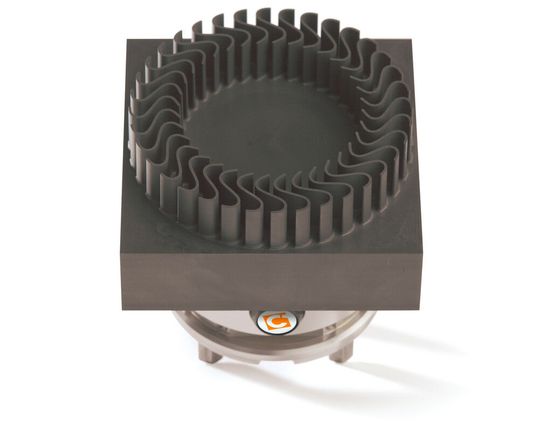
(Source: Cimtrode)
The demand for graphite on the global market is growing continuously and at an increasingly rapid pace. This is hardly surprising, as the versatile material is used in many booming markets. Numerous components in the semiconductor industry, for example, such as wafers, electrodes, brackets and clamps are made from graphite. In electromobility, the material is an important component of anodes for battery production as well as brushes and contacts for current collectors. Graphite is often preferred over copper for electrode production in tool and mould making for erosion processes. The carbon type has already proven itself in this field. Having started out as an electrode manufacturer, Cimtrode is now a technology and development expert as well as a source of ideas in the field of graphite. A milestone in the company's history was the introduction of the “all-inclusive electrode” made from this material.
Medium and Coarse Grain---Special Graphite Block/Round

Advantages of graphite electrodes over copper
Based on many years of experience in graphite machining, the company has developed additional innovative and practice-orientated products designed by users for users. These include, for example, the high-precision Seagull milling cutters with cost-reducing cutting pressure optimisation and the C-View optical inspection system, which benefits tool and mould making. Compared to copper, graphite has many advantages which directly and positively affect the economic efficiency of electrode production and the erosion process. For example, there is no manual reworking, no deburring, hardly any burn-off and the electrode comes out of the milling machine ready for eroding, as Cimtrode explains. This saves time and money and also generally increases the dimensional accuracy and ultimately the quality of the moulded nests produced in this way. Another major advantage is the design options. This is because graphite does not melt, but sublimates at around 3,750 °C - in other words, it changes directly from a solid to a gaseous state. This makes this type of carbon very heat-resistant and dimensionally stable. This means that even intricate and complex electrode geometries can be produced very variably using HSC milling technology. With today's possibilities, says Cimtrode, graphite can be machined much more easily than copper.
GALLERY
:quality(80)/p7i.vogel.de/wcms/cc/3e/cc3ed06c1400ccc928ce1a8113f95583/0116473924.jpeg "The machining methods for graphite have also changed in the meantime. Cimtrode has tested whether wet machining with cooling lubricant offers advantages. This has indeed been confirmed. Here is a graphite electrode from wet machining.")
:quality(80)/p7i.vogel.de/wcms/75/d9/75d96ab4b115a06e9060ba3eb75830f7/0116473920.jpeg "Here is another graphite electrode for the automotive industry, which was machined at Cimtrode using wet machining with diamond-coated milling cutters from Cemecon.")
:quality(80)/p7i.vogel.de/wcms/0c/42/0c42f5ad178510952028a1a3c7e0dc3e/0116473953.jpeg "Because the electrodes for eroding in tool and mould making are becoming increasingly delicate, a suitable measuring and testing technology is necessary to ensure quality. With the C-View measuring system, Cimtrode has created such an option, which is also used at Cemecon.")
Diamond-coated cutters make it possible
However, this simple type of graphite machining only became possible with diamond coatings for the corresponding precision tools. This is because graphite is highly abrasive. The degree of wear on the milling tool depends on the grain size of the graphite. Very fine graphite with a grain size of up to one micrometre is used for finishing electrodes, for example, which has a very abrasive effect. Without effective wear protection for the carbide tools, machining is scarcely economical. This is precisely the aspect where diamond coatings score highly. And Cemecon is a pioneer in this field. The company has developed the diamond coating material "CCDia Carbonspeed" especially for machining graphite, which is particularly wear-resistant, as the company emphasises. As a multilayer, these coatings also have the ability to stop cracks that would otherwise cause the tool to fail completely.
Latest news
 German
  English
  Arabic
  French
  Japanese
  Korean
  Russian
  Spanish
  Vietnamese